
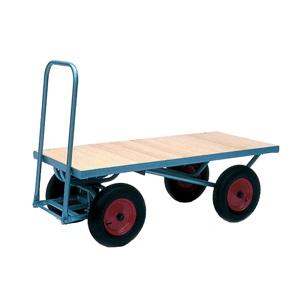
The pneumatic wheel is one of the most used types of wheels in use across the world today. Its popularity comes from its versatility, flexibility, and reliability. In this blog, we'll delve into the top 4 reasons why these wheels are a reliable choice for a range of applications.
Originally designed for use within the industrial and automotive industries, these black and red wheels have found their way into the realm of domestic use. Thanks to their versatile, robust, and flexible load capacities, these wheels can be commonly seen on gardening and equestrian wheelbarrows, builder’s sackbarrows, and multiple types of DIY trolleys.
1. Mobility and Manoeuvrability
When facing uneven environments such as grass, soil, and gravel the need for a wheel that will move with you rather than against you is vital.
The inflatable outside tyre of a pneumatic wheel is designed to absorb the shock and roughness of such surfaces allowing you to move across the uneven terrain without losing control. This makes it perfect for use in outside environments where no surface is ever the same.
2. Strong, Yet Flexible
The pneumatic wheel usually comes as either a metallic or plastic inner centre. This centre provides structural support to the outer tyre and distributes the load evenly across the wheel to reduce the risk of deformation or damage.
A wheel with a plastic centre is designed for light-duty usage, holding loads up to 125kg. These wheels are great for use on outdoor trolleys that move across a small area, such as a garden or allotment. An example of these is our WATP series, which has a wide tread helping to prevent damage to ground, such as grass or soil.
Whereas the WATPB option is perfect for use on terrain that isn't expected to be stable or consistent, such as moving kayaks or canoes from car to water. This wheel can be hooked onto a surf trolley for use on gravel, sand, and mud.
For stronger and more robust apparatus such as wheelbarrows and sackbarrows, the metallic centered WATM wheel can hold a huge 300kg per wheel. Usable within a garden and for DIY projects, these wheels are also very popular within the equestrian, farming, and building trade thanks to their extensive load capacity range and ability to move across the varied surfaces faced.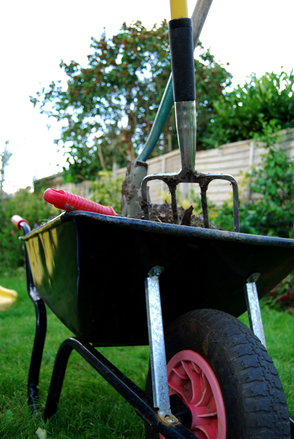
Top tip! In the event you know you’re working upon a surface that is sharp or likely to puncture your wheel, try our flat-free or puncture-proof range as an upgrade to the pneumatic option.
3. Robust Construction
The design and construction of a pneumatic wheel has one primary target: robustness.
As technology has improved over the last 20 years, so has the material and design of the pneumatic wheel. Typically, a wheel is made of multiple layers of durable rubber and fabric compounds that create resistance to wear and tear. Using such a specific construction of these materials has resulted in a reinforced and flexible outer tread that can cushion against the surface instead of digging in as a solid or heavier wheel type.
4. Versatility
Pneumatic wheels are one of the most versatile types of wheels available. With advantages such as tyre pressure adjustability for optimal performance and specialist treads for enhanced traction, these wheels are the choice for stability, balance, and making apparatus mobile and maneuverable when other options are often restricted.